Energy Independence. Done Right.

Your home can produce, store, and manage its own energy. Here's how it works.

We're WattsUp Renewable — a small team that geeks out on home energy systems. We help homeowners understand the technology, run the numbers, and figure out what actually makes sense for their home.

What We Actually Do

How we think about home energy.

Every home is different — different roof, different utility rate, different goals. We start by understanding yours. Then we put together a plan based on real data, not a sales script.

01

Assess first.

What's your current system doing? What's it costing you? We start with your utility data and your existing equipment before we talk about adding anything new.

02

Teach, don't pitch.

We walk you through the real performance data, the actual tradeoffs, and the honest numbers. You should understand this stuff — it's your home.

03

Think in sequences.

Solar, storage, EV charging, electrification — these systems work together. The order you build them matters. We help you figure out what comes first and why.

The 4 Pillars of Energy Independence

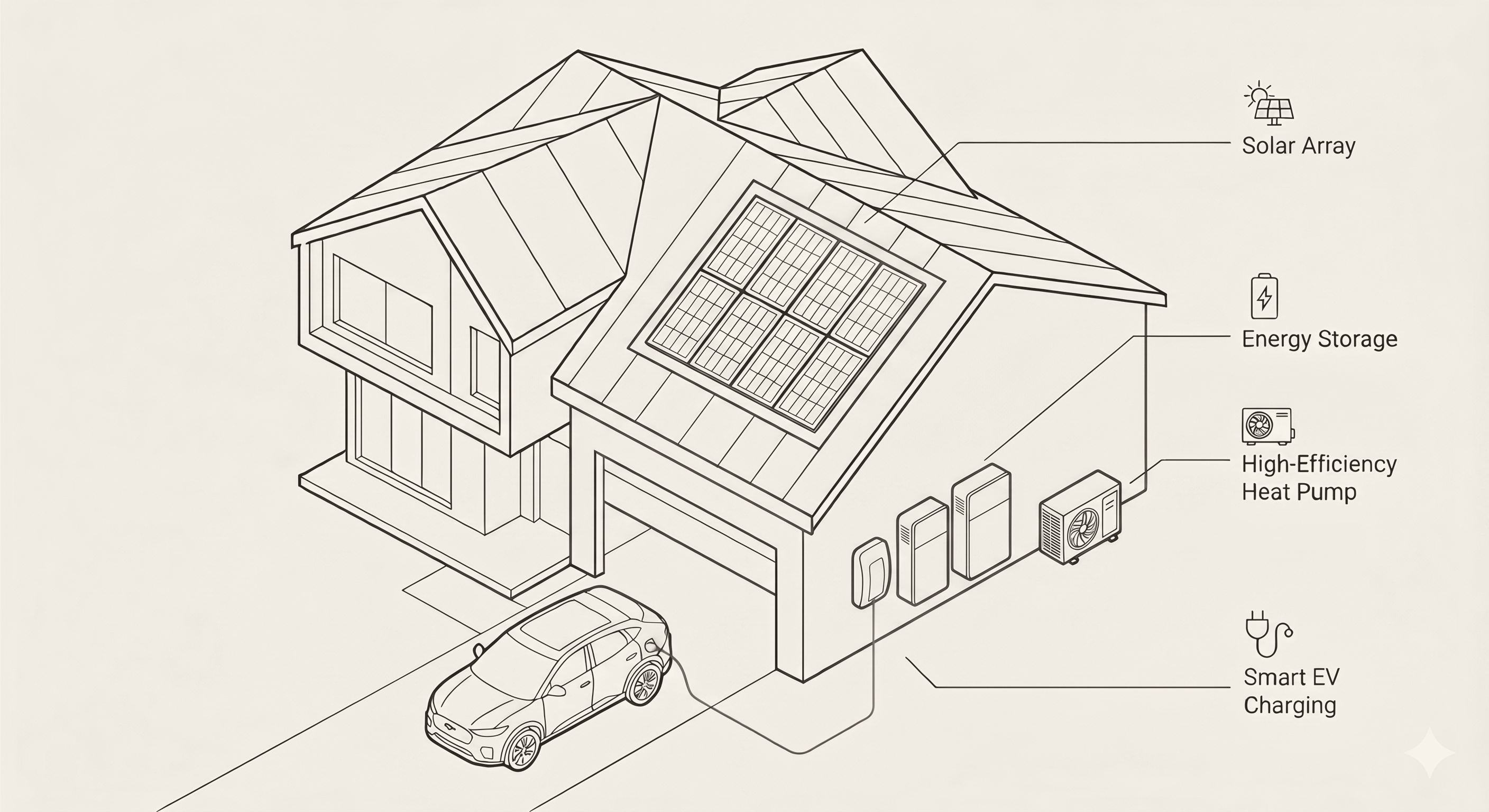
The four pillars of home energy independence.

Most homes already have one or two of these pieces. The trick is understanding how they connect — and which upgrade actually moves the needle for your situation.

01
Pillar One

Solar Generation

Today's panels produce significantly more power per square foot than systems installed five years ago — at a lower cost per watt than any point in history.

The technology is mature and reliable. The real question is sizing: how much do you actually need based on your usage, your roof geometry, and the loads you're planning to add down the road?

Panel efficiency has doubled compared to systems installed a decade ago. A properly sized modern system uses less roof space and produces significantly more power.
Inverter technology matters as much as the panels. Modern string inverters with optimizers or microinverters handle shading and partial production in ways older systems simply couldn't.
Size for your future loads, not just your current bill. If you're adding a battery, EV charger, or heat pump, your solar array needs to account for those demands from day one.
02
Pillar Two

Battery Storage

Modern lithium iron phosphate batteries have a decade of real-world data behind them. They're not just backup power — they give you control over when and how you use the grid.

A properly sized battery keeps critical loads running through outages, shifts your solar production into peak-rate hours, and reduces your exposure to rate increases. Configuration depends on what you're actually trying to accomplish.

LFP chemistry is the current residential standard — safer, more cycle-stable, and longer-lived than the earlier NMC batteries that caused problems for early adopters. The technology has matured.
Backup coverage is a design choice, not a default. We help you understand exactly which loads a given battery configuration covers so there are no surprises when the grid goes down.
Rate arbitrage and demand response programs are available in the Northeast — turning your battery into an active financial asset, not just insurance against outages.
03
Pillar Three

EV Charging

If you drive an EV, it's probably the single largest new electrical load in your home — and the one that benefits most from smart energy planning.

A Level 2 charger adds 20–30 miles of range per hour. Integrated with solar and time-of-use scheduling, you can fuel your car almost entirely on energy you produce. The math on this one is usually pretty straightforward.

Level 2 is the correct answer for home use. Level 1 is too slow for daily driving. DC fast chargers are public infrastructure. A properly sized Level 2 charger handles most drivers' daily needs overnight.
Smart chargers integrate with your solar production and time-of-use rates — automatically scheduling charging to maximize solar self-consumption and avoid grid peak pricing.
Vehicle-to-home (V2H) technology is here now in select vehicles — using your EV battery as a home backup source. Planning your electrical infrastructure today means you're ready to use it.
04
Pillar Four

Home Electrification

Heat pumps, induction cooktops, and heat pump water heaters don't just match gas equipment — they outperform it. Even in cold climates.

Cold-climate heat pumps work efficiently well below freezing. Induction boils water faster than gas. Heat pump water heaters run at 2–3x the efficiency of resistance units. The only real question is sequencing — what to swap first and how it fits with the rest of your system.

Heat pumps deliver 2–4x more heat per unit of electricity than a gas furnace can ever achieve — at typical Northeast temperatures. The efficiency advantage is structural, not marginal.
Sequencing matters. Replacing the highest gas loads first — HVAC and water heating — reduces gas dependence fastest and makes your solar system go further immediately.
Federal tax credits and state incentives remain available for qualifying heat pump equipment. Equipment approaching end of life is the right trigger point — act on the replacement cycle, not emotion.
Why WattsUp

What we do.

🔍

Inspection Services

Buying, selling, or refinancing a home with solar? We provide independent, third-party inspections that give everyone in the transaction clear data on system condition and expected performance.

System Inspections

Full diagnostic of panel health, wiring integrity, inverter performance, and production history. We document everything and give you a clear picture of what's working, what isn't, and what to watch.

Inspection Certificates

A formal, third-party report on system condition, age, capacity, and projected output. Useful for real estate transactions, insurance documentation, and refinancing.

Inspection Insurance

Coverage plans from 1 to 5 years that protect against system underperformance or component failure identified during inspection. Real data, real coverage, real peace of mind.

Get in touch about inspections →

System Design & Consulting

Whether you're building new, renovating, or managing an existing system through a construction project, we handle the energy planning so you and your contractor don't have to guess.

New Construction

We work with your architect and builder to plan panel layout, conduit runs, electrical capacity, and inverter placement before the first wall goes up. Getting it right at the blueprint stage saves real money.

Renovations & Additions

Adding square footage or reconfiguring your home? We redesign your energy system to match the new layout and updated load requirements so nothing gets left behind.

Removal & Reinstallation

Reroofing, structural work, additions — we safely remove and reinstall solar, battery, and electrical systems so your contractor can work unobstructed and your system comes back online right.

Get in touch about a project →
Ready to take control?

Curious? Let's talk about your home.

No sales pitch. Just a conversation about where you are, what you're thinking, and whether any of this makes sense for your situation.

Get in Touch →